
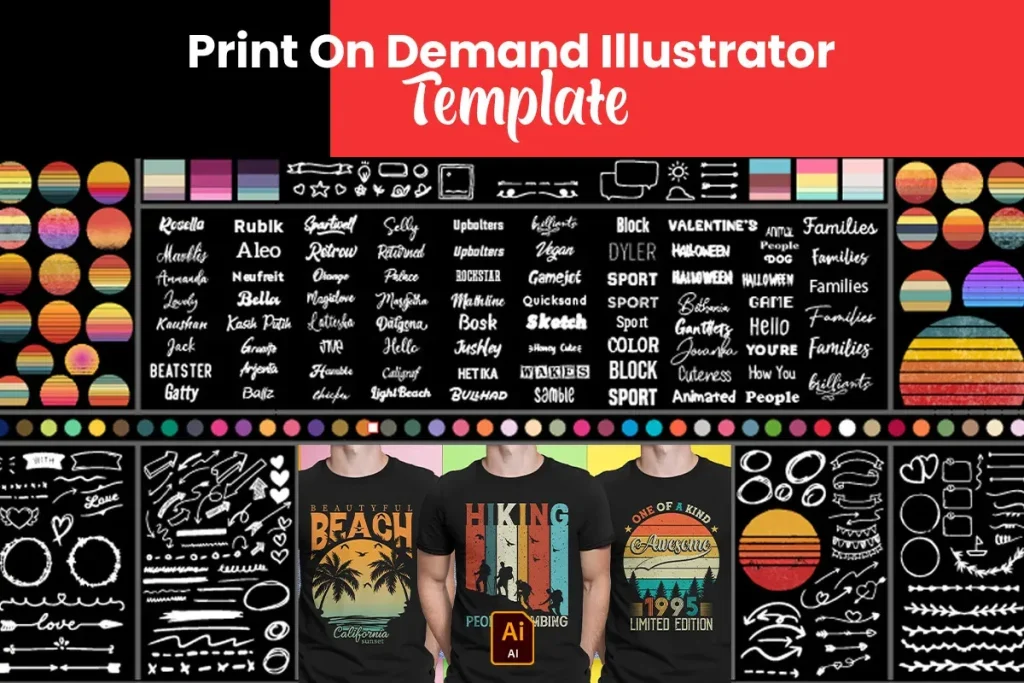
Print on Demand graphics are reshaping how online sellers communicate value in a crowded marketplace. In the fast-paced world of e-commerce, the graphics you choose are more than decoration—they persuade shoppers to click, explore, and buy. By exploring POD artwork ideas, you can focus on bold, scalable designs that create a cohesive look across T-shirts, mugs, and phone cases. To maximize impact, integrate tips from POD graphics design tips and aim for eye-catching POD graphics that stand out in thumbnails. This approach makes visuals scalable assets across your catalog, aligning with POD merchandising design and custom graphics for print on demand.
Beyond the exact term, the idea can be described as on-demand printing visuals, storefront artwork for custom merchandise, or scalable digital graphics designed for multiple products. Using Latent Semantic Indexing principles, connect related concepts such as on-brand merchandising visuals, print-ready templates, and product-specific artwork to tell a cohesive story. The aim is to convey value through vector assets, typography, and imagery that translate smoothly from shirts to mugs and phone cases. Practically, this means building a flexible design system, testing variations, and optimizing thumbnails for marketplace discovery. Viewing graphics as portable assets supports faster iterations and stronger branding across your POD lineup.
1) Print on Demand graphics: Building a cohesive design system for scalable success
Establishing a strong design foundation starts with a clear design system: a documented color palette, typographic rules, and image licensing guidelines. A cohesive approach helps your brand feel consistent across products—from t-shirts and hoodies to mugs and phone cases—creating recognition that travels with every listing. By treating Print on Demand graphics as a system rather than a one-off, you build sustainability and a scalable path to future releases.
Develop a style guide that covers color contrast, typography, imagery licensing, and usage rules. This ensures your graphics reproduce crisply across light and dark surfaces, on different product templates, and across platforms. The result is consistent branding, faster production, and easier scaling for new lines. This framework supports POD merchandising design and makes it easier to create custom graphics for print on demand that stay legible on small surfaces.
2) Eye-catching POD graphics that convert: practical strategies for fast impact
Eye-catching POD graphics grab attention in seconds, especially at thumbnail size. Focus on bold shapes, clear focal points, and a message that resonates with your target audience. When your visuals align with POD artwork ideas and POD merchandising design, they travel across products and contexts with minimal adjustment.
Test variations and contrast to ensure readability on diverse backgrounds; use real product mockups to see how the design performs on different surfaces. Optimize compositions for mobile browsing and quick scans, and track signals like click-through and add-to-cart rates to guide refinements in color, scale, and focal emphasis.
3) POD artwork ideas that resonate: turning concepts into product-ready designs
POD artwork ideas begin with structured brainstorming and mood boards. Gather color palettes, textures, typography samples, and imagery that reflect your brand voice, then apply POD graphics design tips to shape concepts into viable designs. This pre-work helps you generate concepts that feel cohesive while remaining adaptable across products.
Convert ideas into scalable, print-ready assets by prioritizing vector elements, clean linework, and adjustable colorways. Test how a single concept performs on multiple product surfaces, ensuring key elements stay within safe zones and maintain impact when scaled to larger formats or cropped to smaller sizes.
4) Streamlined workflows for POD graphics: speeding production without sacrificing quality
Streamlined workflows reduce time-to-market without sacrificing quality by using reusable templates, scalable assets, and consistent color management. Incorporate POD merchandising design principles to ensure each asset fits across product categories and storefronts, leveraging POD graphics design tips to stay aligned with brand standards.
Deliver print-ready files with the correct color space (CMYK for most printers), appropriate bleed and safe zones, and multiple file formats as required by platforms. Implement a robust file management system with clear naming, versioning, and centralized asset libraries so teams can collaborate efficiently and maintain consistency across new releases.
5) Adapting Print on Demand graphics across product lines and platforms
Different products demand adjustments to preserve visual impact. A design that looks bold on a shirt may need spacing tweaks for a mug or curvature adjustments for a phone case. By planning with a cohesive design system and considering platform-specific specs, you can adapt Print on Demand graphics to tees, mugs, mugs, posters, and beyond while maintaining a unified brand voice and aesthetic, a core goal of POD merchandising design.
Test how designs render across multiple storefronts and devices, ensuring safe margins, readable typography, and color consistency. Use platform guidelines to optimize file formats, image resolution, and cropping strategies, and perform iteration cycles to refine compositions for each product line, keeping your branding coherent and effective across the entire catalog.
Frequently Asked Questions
What are the top POD graphics design tips for creating Print on Demand graphics that convert?
To craft high-converting Print on Demand graphics, start with a solid design foundation: a simple, brand-aligned color palette, legible typography, and scalable vector artwork. Test readability on thumbnails and across multiple product templates (shirts, mugs, phone cases) to ensure your message lands at a glance. Deliver print-ready files in CMYK and PNG formats, and keep branding consistent to amplify conversions across your POD catalog.
How can I create eye-catching POD graphics that perform across shirts, mugs, and phone cases?
Make eye-catching POD graphics by centering a strong focal point, using high-contrast colors, and keeping elements scalable for both small thumbnails and full-size prints. Ground designs in a clear concept that resonates with your audience, use mood boards, and test variations on multiple product templates to ensure cross-product appeal.
What are POD artwork ideas for Print on Demand graphics that resonate with customers?
POD artwork ideas include trend-driven concepts, niche themes, inspirational quotes, and simple illustrations that can be easily adapted across products. Start with mood boards and rough sketches, then refine ideas into a cohesive set that preserves your brand voice when applied to apparel, accessories, and home goods.
What should I consider when designing custom graphics for print on demand to preserve quality?
For custom graphics for print on demand, prioritize vector artwork when possible, use CMYK color space, and account for bleed and safe zones to avoid cutouts. Provide scalable asset formats (SVG, EPS) alongside raster files, and verify licenses and usage rights to ensure every design is print-ready and ready for multiple product types.
How does POD merchandising design influence the performance of Print on Demand graphics?
POD merchandising design shapes performance by creating a cohesive design system—consistent typography, color, and imagery that boost brand recognition. A strong merchandising approach supports cross-sell across products, improves storefront consistency, and enhances search visibility, helping your Print on Demand graphics attract more clicks and conversions.
| Aspect | Key Points |
|---|---|
| Design foundation | Establish a clear style guide with color palettes, typography, and imagery rules. Use consistent visuals across products to boost brand recognition; pay attention to color contrast and licensing to ensure legibility and legality. |
| Eye-catching POD graphics that convert | Create visuals that resonate with your audience; simpler designs often perform better on small surfaces. Use visual storytelling and ensure designs are adaptable across products. |
| Idea generation workflow | Develop ideas via mood boards, analyze top sellers for insight (without imitation), brainstorm in short sprints, and test variations to identify the most impactful version. |
| Efficiency & quality | Use scalable assets (vector formats), deliver print-ready files (CMYK, bleed, safe zones), create reusable templates, test with real mockups, and optimize for accessibility. |
| Tools & workflows | Leverage Illustrator/Photoshop, Procreate, Canva, and licensing platforms. Build a disciplined workflow from concept to export. |
| Tailoring to product types & audiences | Adjust designs for shirts, mugs, phone cases, and wall art. Respect print-safe areas, surface curvature, and visibility on different sizes. |
| Quality control & scalability | Check resolution and color accuracy, manage files with clear naming/versioning, ensure inclusivity, and optimize for scale across catalogs. |
| Common pitfalls | Avoid copying trends too closely, prevent overcomplication, maintain consistent branding, and always review platform-specific specs. |
Summary
Conclusion: Print on Demand graphics are the backbone of a compelling POD storefront, blending strong design systems with scalable workflows to turn ideas into ready-to-print assets. By establishing a clear design foundation, generating eye-catching POD graphics, and tailoring visuals to each product—from shirts to mugs to phone cases—you create a cohesive brand that resonates with customers. Prioritizing quality control, accessible design, and efficient templates helps you scale your catalog while maintaining consistency. In short, thoughtful Print on Demand graphics and disciplined design practices translate into higher engagement, stronger conversions, and a sustainable POD merchandising design strategy.