
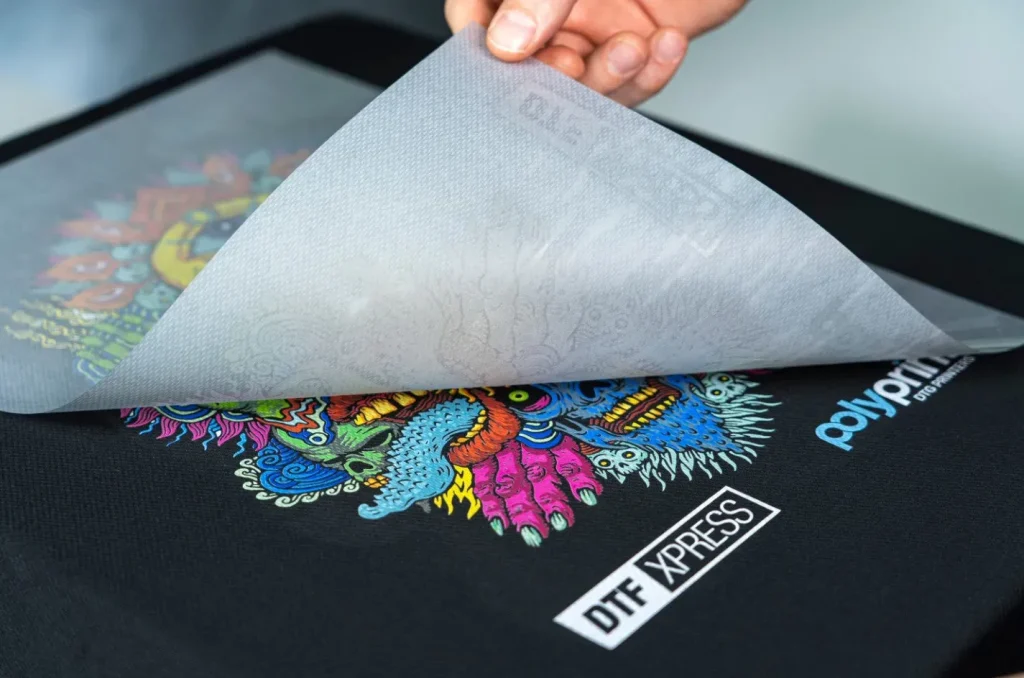
DTF transfers on dark fabrics open bold, printer-friendly possibilities for black, navy, charcoal, and other deep-toned garments. Understanding how opaque white prints interact with dark textiles helps ensure vibrant color read and longevity. DTF printing on dark fabrics relies on a strong white base to support all subsequent colors and maintain saturation. This guide also touches on troubleshooting DTF on dark fabrics to prevent dull results and edge lifting. We also compare heat transfer vs DTF on dark garments to help you choose the best method for durability, detail, and production efficiency.
From a terminology standpoint, the same process is often described as direct-to-film printing on dark textiles, or film-based transfer for rich, high-detail artwork on color-rich fabrics. Crucially, a strong white underbase supports opacity and color fidelity across a range of substrate colors, making the results legible and durable. Together with careful curing, optimized settings, and thorough test prints, this latent semantic indexing approach helps designers improve outcomes while expanding the range of garments that can be printed.
DTF Transfers on Dark Fabrics: Mastering Opaque White Prints for Bold Color on Black and Navy
DTF transfers on dark fabrics unlock full-color artwork with bold, crisp outlines on black, navy, charcoal, and other deep tones. The core secret is the opaque white underbase, which acts as a canvas that makes every color pop instead of getting tinted by the garment. When designing, keep the dark background in mind and plan the white layer to fully cover the fabric so reds, blues, greens, and yellows read clearly after transfer.
In practice, ensure your workflow prioritizes consistent ink saturation and proper curing. The white layer should be laid down evenly and be capable of withstanding the heat and pressure of the transfer process. From design to finished product, attention to underbase opacity, alignment, and post-press care ensures durable, vibrant results across multiple washes. Typical heat press guidelines suggest around 160–170°C (320–340°F) with firm, even pressure for 15–20 seconds, followed by a brief cooldown before removing the carrier sheet to preserve crisp edges.
Opaque White Prints: Enhancing Brightness and Color Readability on Dark Substrates
Opaque white prints are not just a stylistic choice; they are the technical backbone for color fidelity on dark fabrics. The strength of the white underbase determines how reds, blues, yellows, and greens appear when printed on black, navy, or charcoal substrates. Achieving true opacity depends on DTF printing on dark fabrics practices, ink formulation, and the whiteness of the base print, so test prints on the same fabric are essential to verify opacity.
Designers should optimize color separations to preserve contrast against the dark background, and be prepared to adjust the white coverage if the garment color approaches near-black. Calibrated printer settings, proper DPI, and verified curing contribute to vibrant, long-lasting results. This kind of opacity-focused workflow supports durable color that survives washing while keeping detail intact.
DTF White Ink Opacity: Achieving Consistent Coverage Across Dark Fabrics
DTF white ink opacity governs how well the underlying fabric color is hidden and how downstream colors stay bright after transfer. Higher opacity improves readability of fine lines and color saturation on black, navy, and other dark textiles. Achieving good opacity depends on the printer, the white ink formulation, the amount of white laid down, and the curing method.
To validate opacity, run substrate-specific test prints on the exact fabric type and color you plan to use. If opacity is lacking, increase white base coverage, adjust color separations, or tweak heat-press settings to ensure proper adhesion and full curing. Monitoring white ink opacity across batches helps maintain consistency in color accuracy for DTF printing on dark fabrics.
Troubleshooting DTF on Dark Fabrics: Common Issues and Practical Fixes
Even with a solid workflow, issues can arise. Common problems include inconsistent white opacity, colors appearing dull after transfer, slight edge misalignment, and edge cracking. Fixes include expanding white underbase coverage, verifying ink formulation, calibrating printer settings, and ensuring even pressure during the transfer. Regular substrate-specific tests help identify which fabrics require adjusted opacity or curing times.
Additional practical steps focus on powder application, carrier removal, and post-press care. For example, ensure the adhesive powder is evenly distributed and fully cured, minimize powder residue on garments, and maintain consistent pre-press routines. Documenting settings and maintaining equipment also support reliable results and reduce the risk of issues like peeling or adhesion failure during washing. If problems persist, consult troubleshooting DTF on dark fabrics resources and adjust the workflow accordingly.
heat transfer vs DTF on dark garments: Choosing the Right Method for Durability and Detail
DTF on dark garments offers true full-color capability, better opacity on dark backgrounds, and a more durable finish that survives repeated washings without cracking or peeling. When comparing to traditional heat transfer, DTF printing on dark fabrics typically delivers sharper detail and more consistent color fidelity across complex images, especially on black or navy bases. The workflow supports multi-color designs with fine lines and subtle shading without sacrificing legibility.
However, for very small runs or fast-turn orders, heat transfer can still be advantageous depending on equipment, cost, and setup time. In evaluating heat transfer vs DTF on dark garments, consider run size, garment color, fiber content, and expected wash durability. For many shops, the best approach blends both methods strategically while prioritizing DTF for high-detail, saturated designs and using heat transfer for simple, quick-turn pieces.
Frequently Asked Questions
What are the main benefits of DTF transfers on dark fabrics compared to traditional heat transfer methods on dark garments?
DTF transfers on dark fabrics offer true full-color capability, a strong white underbase, sharp detail, and improved durability across washes. They excel in opacity on dark backgrounds and simplify multi-color designs, making bold artwork pop on black, navy, charcoal, and other deep tones.
How do opaque white prints contribute to successful DTF transfers on dark fabrics?
Opaque white prints provide the essential canvas that lets every color read accurately on dark textiles. They create the contrast needed for reds, blues, greens, and yellows to remain vibrant rather than appear muted, ensuring legibility and visual impact on dark garments.
What factors affect DTF white ink opacity, and how can I optimize it for dark fabrics?
White ink opacity depends on printer and ink formulation, base whiteness, ink laydown, and curing. To optimize for dark fabrics, run substrate-specific tests, increase underbase coverage where needed, and adjust curing temperatures and times to preserve opacity and color fidelity.
What are common troubleshooting steps when DTF transfers on dark fabrics show issues like dull colors or misalignment?
Start with printer calibration and ensure proper white underbase curing, then verify transfer temperature, dwell time, and pressure. Check alignment carefully, ensure clean carrier removal, and manage adhesive powder to prevent residue or ghosting in the final print.
When should I choose heat transfer vs DTF on dark garments?
If you need rapid, small-run production with simple designs, heat transfer can be viable but often struggles with opacity on dark fabrics. DTF transfers on dark fabrics provide better color fidelity, durable underbases, and detailed multi-color prints, making them generally preferred for bold, long-lasting designs on dark garments.
| Aspect | |
|---|---|
| DTF on dark fabrics concept | DTF transfers print on film, apply adhesive powder, and transfer to fabric with heat. For dark fabrics, layer order and quality matter most: the white ink layer acts as a canvas, enabling vibrant colors to read on dark backgrounds. A strong opaque white base is foundational so other colors read correctly and the design remains legible after washing. |
| Why opaque white prints matter | Opaque white underlays create the contrast that makes colors read as intended on dark substrates. Without sufficient white, reds, blues, greens, and yellows can appear dull, muddy, or tinted by the fabric. Opaque white prints are essential for logos, photos, and intricate artwork on black, navy, charcoal, and other deep tones. |
| DTF white ink opacity & color accuracy | Opacity determines how well the white hides the fabric. High opacity is needed to keep downstream colors vibrant. Factors include printer/ink formulation, whiteness of the base print, ink coverage, and curing. Use test prints on the target fabric to verify opacity and adjust separations, white coverage, or heat-press parameters as needed. |
| Workflow & best practices | Follow a reliable workflow: design with the dark base in mind; calibrate printer settings; apply a uniform adhesive powder and cure per suppliers’ guidance; pre-press to remove moisture and wrinkles; set transfer parameters around 160–170°C (320–340°F), with firm, even pressure for 15–20 seconds and a cooldown before removing the carrier. Post-press care helps durability. |
| Design considerations for dark fabrics | Contrast between design and garment color is critical for readability. Near-black fabrics may require a brighter white underbase; dark navy/charcoal might need adjusted palettes for legibility. Some designs may use the fabric itself to create effects, with the white base enhancing highlights rather than covering the entire background. |
| Troubleshooting common DTF issues | Common issues include inconsistent white opacity, dull colors, misalignment, cracking/peeling after washing, and adhesive residue. Fixes involve increasing white underbase coverage, verifying ink and curing, ensuring proper alignment, adjusting dwell time and temperature, and appropriate powder application. |
| DTF vs heat transfer on dark garments | DTF offers true full-color capability, better opacity on dark backgrounds, and more durable finishes that withstand washing. It simplifies multi-color, detailed designs. Some heat transfer methods can be faster for small runs but often struggle with opacity on dark fabrics. |
| Quality control & maintenance | Perform substrate-specific tests, standardize temperature/pressure/dwell times, maintain equipment (printer heads, ink levels, films), and document settings for reproducibility across batches. |
| Real-world case studies | Brands report improved color reproduction, crisper white bases, and fewer misprints after refining white ink opacity and curing parameters for dark fabrics. |